Colombia: Mature Fields, Thermal Optimisation and the Challenges of Incremental Recovery
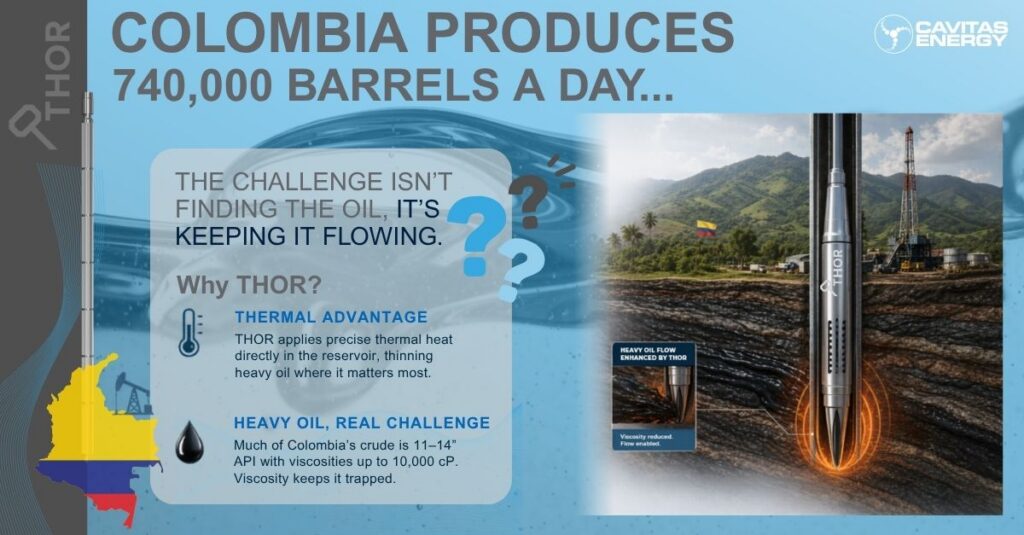
Colombia stands as one of Latin America’s most stable oil producers, with a current production of approximately 740,000–750,000 barrels of oil per day, sustained primarily by mature assets rather than new discoveries.
Unlike emerging heavy-oil provinces, Colombia’s production profile is defined by fields that have been producing for decades, where the main challenge is no longer finding hydrocarbons, but maximizing recovery from existing reservoirs.
The Maturity Challenge
As oil fields age, reservoir pressure declines, water cut increases, and production rates begin to fall. This creates a fundamental shift in operational strategy: from exploration-driven growth to efficiency-driven recovery.
In many Colombian fields, operators face:
- Increasing water production
- Declining productivity index
- Higher lifting costs
- Reduced incremental recovery per intervention
This challenge becomes even more complex in reservoirs producing heavy crude, where viscosity continues to limit mobility even after years of production.
Heavy Oil in Colombia: A Different Constraint
Colombia’s heavy oil resources are distributed across multiple basins, primarily the Llanos Basin and the Middle Magdalena Basin.
In the Llanos Basin, fields such as Rubiales produce crude between 11° and 14° API, with high permeability but strong viscosity constraints.
In parallel, the Middle Magdalena Basin (MMB) presents a different reality. Fields such as Teca–Cocorná, producing crude around 12° API, are mature, structurally complex, and often associated with long production histories.
Colombian heavy oil reservoirs typically exhibit viscosities ranging from 1,000 to 10,000 cP, placing them firmly within the heavy-oil classification. In these systems, the primary limitation is not reservoir quality, but the inability of the fluid to move under existing pressure conditions.

Two Heavy Oil Realities in Colombia
Colombia’s heavy oil challenge is not uniform.
In the Llanos Basin, the key constraint is mobility, where large volumes of oil remain in place due to viscosity.
In contrast, the Middle Magdalena Basin combines:
- Heavy crude
- Mature depletion
- Steam stimulation history
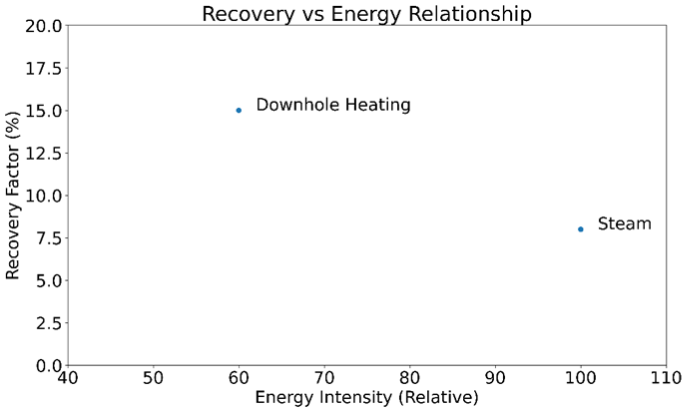
- Low recovery factors (often ~8%)
This creates a dual challenge: improving mobility in reservoirs that are already operationally constrained.
Thermal Optimization in Mature Fields
Unlike greenfield developments, mature assets require precision interventions rather than large-scale infrastructure changes.
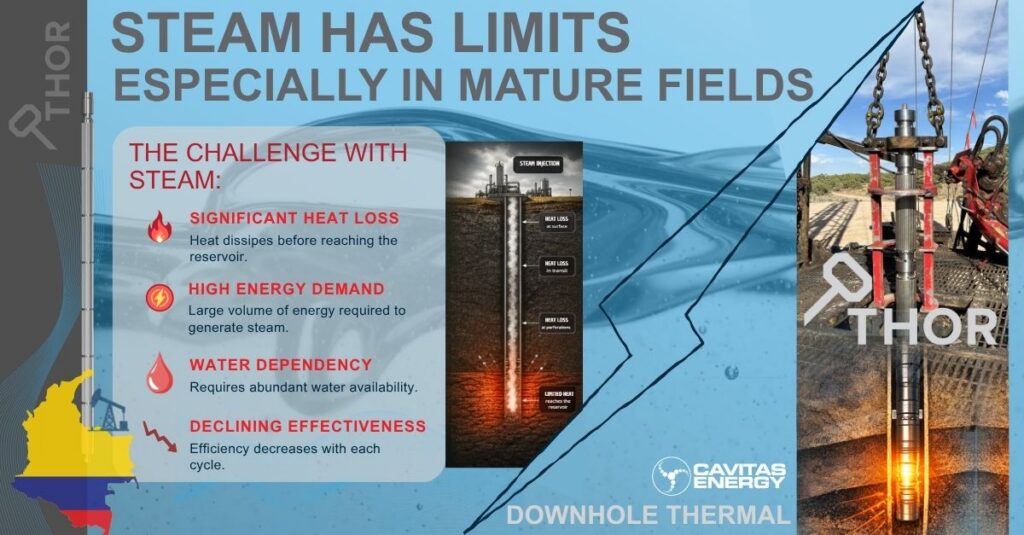
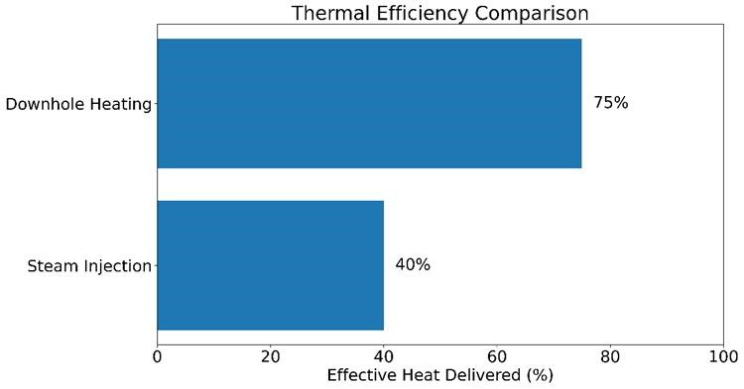
Thermal methods such as cyclic steam stimulation (CSS) have been widely applied in Colombia. However, these processes are:
- Highly energy-intensive
- Dependent on water availability
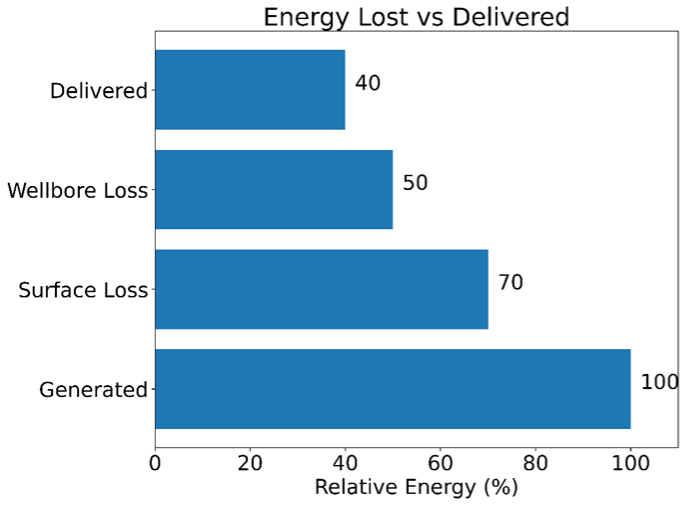
- Subject to significant heat losses
- Increasingly inefficient over time
In many Colombian fields, the challenge is no longer whether to apply heat, but how to apply it more efficiently.
Incremental Recovery: The New Frontier
In Colombia, the objective is no longer to unlock massive new volumes, but to recover additional barrels efficiently from already producing reservoirs.
Even small gains in recovery factors can generate significant economic value.
Downhole Thermal Innovation: THOR in Mature Fields
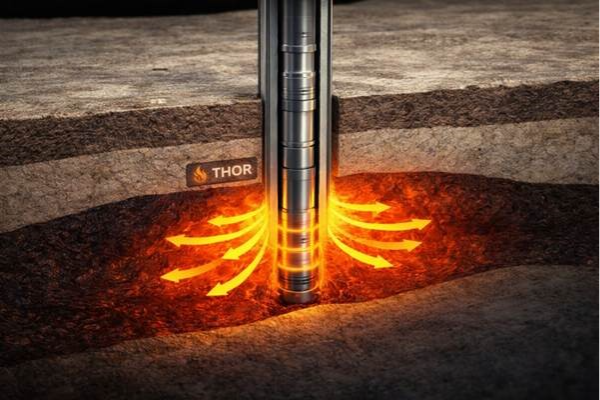
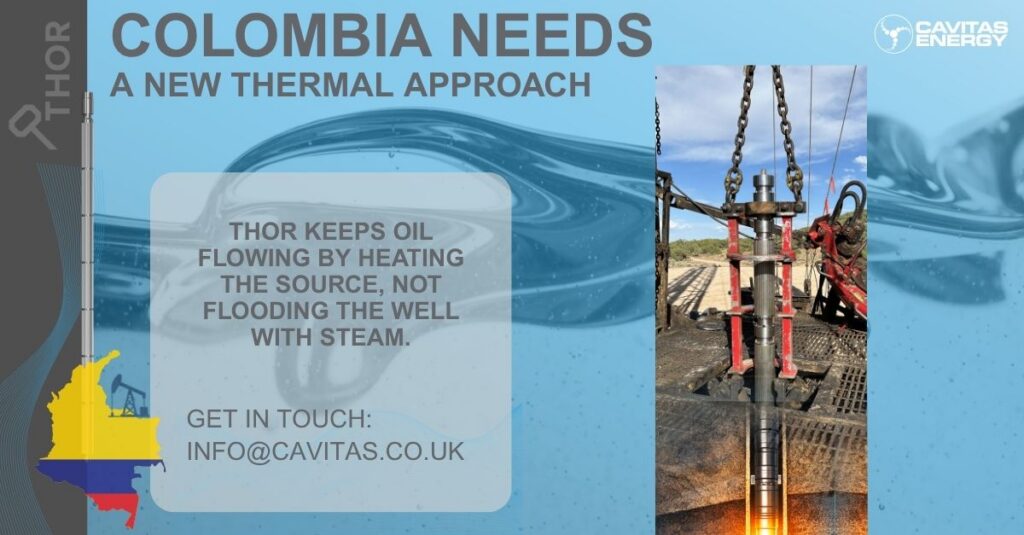
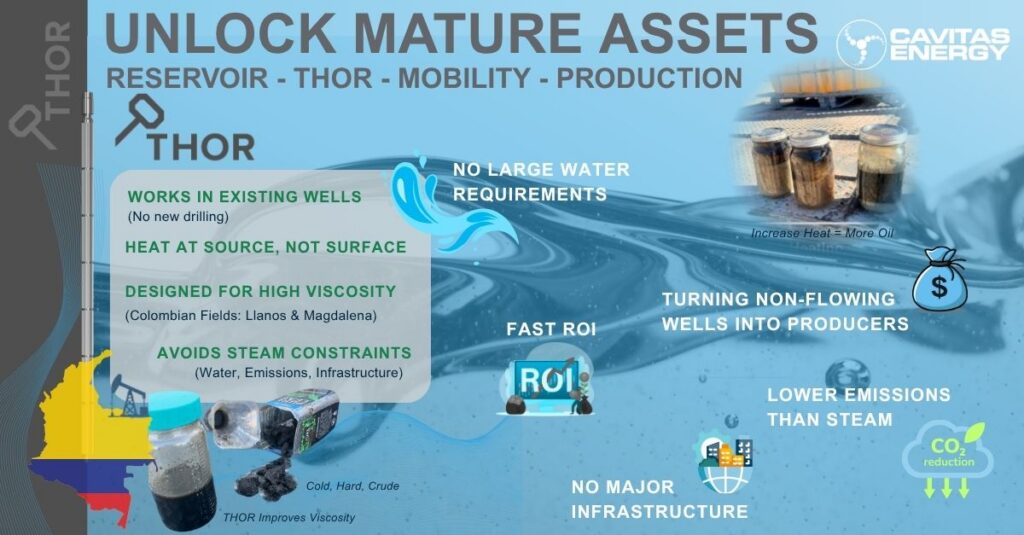
One example of this new generation of technologies is THOR (Thermal Oil Recovery), a downhole heating system designed to deliver controlled heat directly at the reservoir interval.
Unlike conventional thermal methods, THOR generates heat inside the wellbore, reducing viscosity exactly where it matters most.
In fields where steam stimulation has already been applied, the challenge is no longer introducing heat but delivering it more efficiently and precisely.
This approach is particularly relevant in Colombia:
- In Llanos, it improves mobility
- In Middle Magdalena, it complements or replaces inefficient steam
By improving near-wellbore conditions, downhole heating technologies can help:
- Reactivate declining wells
- Improve flow in high-viscosity zones
- Reduce energy intensity
- Extend well life
Thought Leadership
In Colombia, the challenge is not discovering new oil, it is recovering more from what is already known.
The future of mature fields will not be defined by scale, but by precision.
And in heavy-oil reservoirs, the real breakthrough may come from technologies capable of generating heat exactly where the oil is trapped.
In heavy-oil reservoirs, the future of production may ultimately depend on one simple principle: delivering heat exactly where the oil refuses to flow.
Written by: Roberto Herrera
Business Development & Operation Manager
Ecuador, Mexico, Colombia & Peru