
Ecuador: Heavy Oil, Basal Tena and the Engineering Challenge of the Oriente Basin
Some of the world’s largest hydrocarbon resources remain trapped underground, not because they are undiscovered, but because they are difficult to produce.
Ecuador provides a compelling example of this challenge. Today, the country produces roughly 360,000–370,000 barrels of oil per day, with most of this production originating from the Oriente Basin, one of the most prolific petroleum provinces in Latin America.
Major producing assets include ITT (Eden-Yuturi-Tambococha), Sacha, Auca and Shushufindi, fields that together account for a substantial portion of Ecuador’s national production. Oil produced in the Amazon region is transported mainly through the SOTE and OCP pipeline systems, connecting the eastern jungle provinces with export terminals on the Pacific coast.
The Heavy Oil Challenge
The next phase of Ecuador’s oil development will increasingly depend on reservoirs containing heavy and extra-heavy crude. These resources present one of the most fundamental engineering challenges in petroleum production: viscosity.
As crude oil becomes heavier, its ability to flow through porous rock decreases dramatically. In certain Ecuadorian reservoirs, crude gravity can fall to values as low as 4–10° API, meaning the fluid behaves more like molasses than a conventional liquid under reservoir conditions.
Case Study: Pungarayacu – Block 20
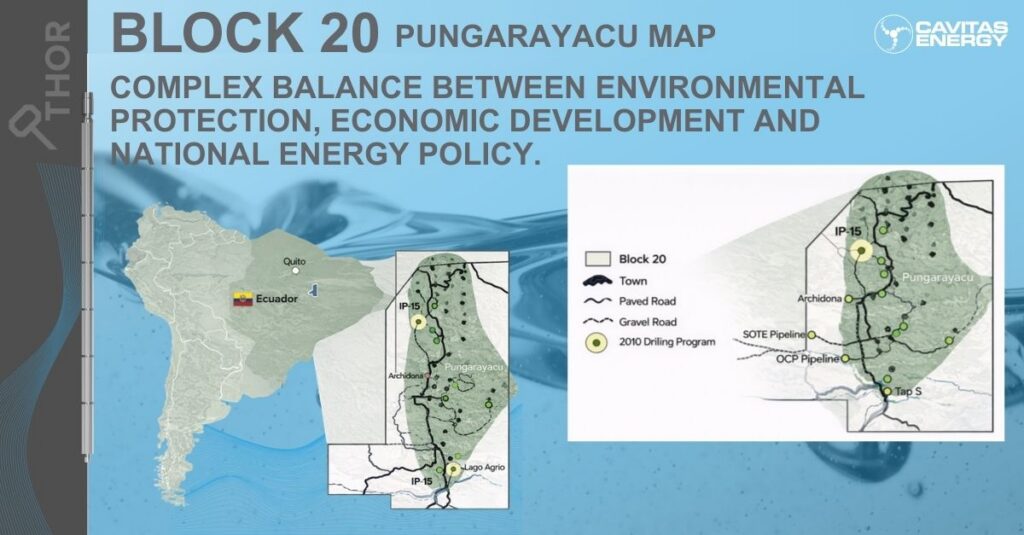
One of the most notable examples is the Pungarayacu field in Block 20. Geological studies indicate porosities around 25%, permeabilities between 3000 and 4000 millidarcies, and reservoir temperatures near 92°F. Despite favourable rock properties, production has historically remained limited due to the extreme viscosity of the crude.
This type of reservoir illustrates how mobility, not rock quality, can become the primary production constraint in heavy oil systems.
The Strategic Importance of the Basal Tena
The Basal Tena formation represents one of Ecuador’s most significant undeveloped heavy oil resources. These reservoirs may contain large hydrocarbon volumes, but their development depends on technologies capable of improving crude mobility while maintaining operational efficiency.
As the industry continues to search for more energy‑efficient recovery solutions, localised thermal approaches near the wellbore are attracting increasing interest across heavy oil provinces.
Downhole Thermal Innovation: THOR Technology
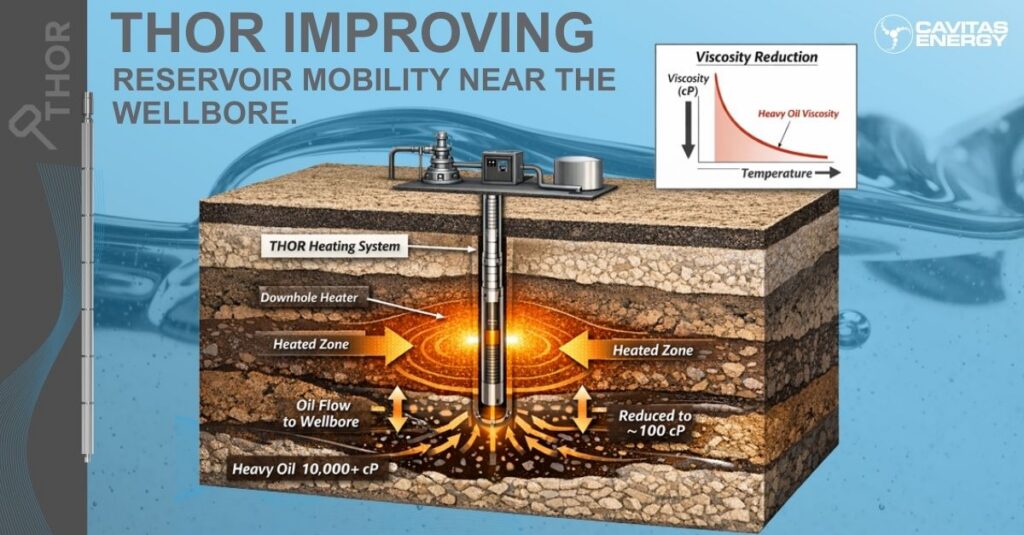
One example of this new generation of technologies is THOR (Thermal Oil Recovery), a downhole heating system designed to deliver controlled heat directly at the reservoir interval. Instead of relying on large steam facilities or extensive surface infrastructure, THOR generates heat directly inside the wellbore, reducing crude viscosity and improving near-wellbore mobility.
By applying heat precisely where it is needed, the system can transform highly viscous crude into a fluid capable of flowing toward the wellbore. In heavy-oil basins such as Ecuador’s Oriente Basin, technologies based on targeted downhole heating may offer a practical pathway to unlock resources such as Pungarayacu and Basal Tena, while maintaining a smaller surface footprint and improved energy efficiency compared with conventional thermal recovery methods.
Political Context: The ITT Decision
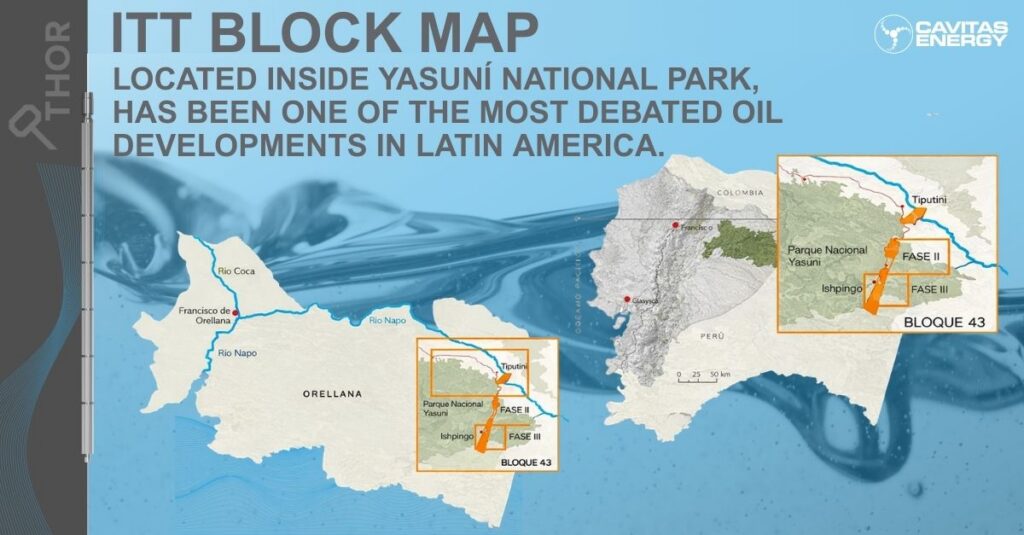
Ecuador’s energy landscape is influenced not only by geology and engineering but also by political and environmental decisions. The ITT block (Ishpingo‑Tambococha‑Tiputini), located inside Yasuní National Park, has been one of the most debated oil developments in Latin America.
In 2023, Ecuadorians voted in a national referendum to halt production in the block, highlighting the complex balance between environmental protection, economic development, and national energy policy. THOR’s smaller footprint can be crucial in these environmentally sensitive jungle and remote environments, to allow heavy oil production to continue without disrupting nature and the local community.
Thought Leadership
The next frontier of oil production will not necessarily be defined by new discoveries. It will be defined by our ability to produce what we already know exists.
In basins like Ecuador’s Oriente Basin, the true challenge is not finding oil – it is making it flow. In heavy-oil reservoirs, the real breakthrough may come from technologies capable of generating heat exactly where the oil is trapped.

Written by: Roberto Herrera
Business Development & Operation Manager
Ecuador, Mexico, Colombia & Peru
To learn how THOR can support extra-heavy oil projects in your region, contact Cavitas Energy.
📞 +44 (0)1224 032585